
A reading resource
Local Business Networking in India
How owners of small firms build working relationships with the businesses around them: starting the conversation, agreeing on something concrete, and keeping the contact useful over years rather than weeks.
Written to be read and used offline, in your own market.
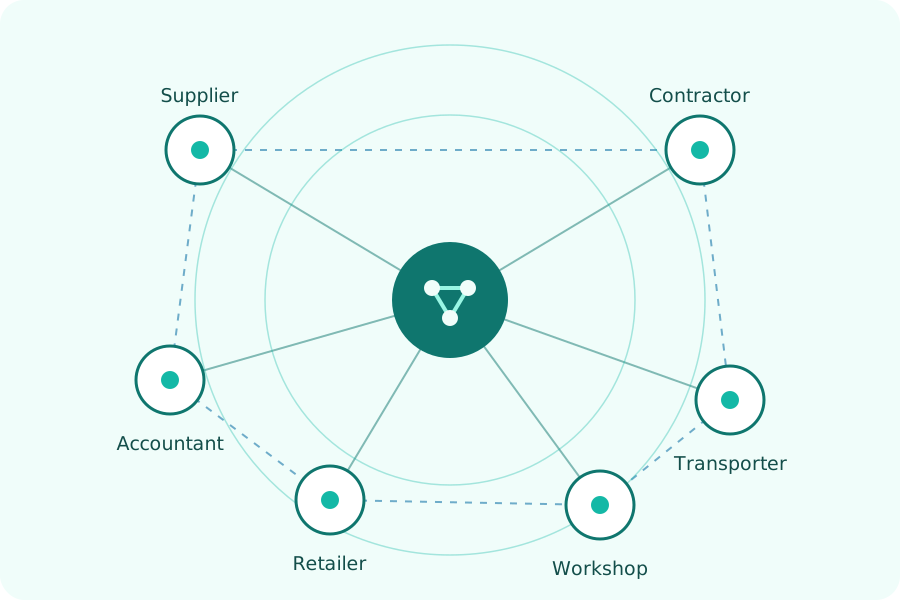
Why Local Ties Matter to a Small Business
Most small firms in India win their next order from someone who already knows their work, or from someone that person vouches for. Advertising reaches strangers; a local relationship reaches people who have seen how you handle a deadline, a complaint or a slow month. That evidence travels faster in a market lane or an industrial estate than any campaign does.
Proximity also lowers the cost of working together. A supplier two streets away can be visited the same morning a problem appears. A printer in the same complex takes a small urgent job because he expects the next twenty from you. None of this requires a platform; it requires that the people involved recognise each other and have some history of keeping their word.
There is a quieter benefit too. Owners of small firms decide alone, and the local circle is often the only source of a realistic second opinion: a fair rate this season, which customer pays late, whether a new rule is enforced in practice.
Meeting the Businesses Next Door
Start with the firms you can walk to. List the ten or fifteen businesses nearest you and mark the ones that serve the same customers without competing for the same work: an interior contractor and an electrical shop, a coaching class and a stationery dealer, a clinic and a diagnostic lab. Those pairs make the easiest first conversations.
Go in person, at a quiet hour, and say plainly who you are and what you do. Do not carry a proposal on the first visit. Ask about their work: what season is busiest, what jobs they turn away, what they wish somebody nearby could handle. Turned-away work is the most productive question, because it points at a gap you may already be able to fill.
What to Agree On First
Keep the first agreement small and specific. A trial order at a stated price. A shared delivery run on Tuesdays. One referral each, then a review after a month. Small agreements are easy to honour, and honouring them is the whole point; a memorandum between two firms that have never worked together proves nothing.
Preparing a Short Account of Your Work
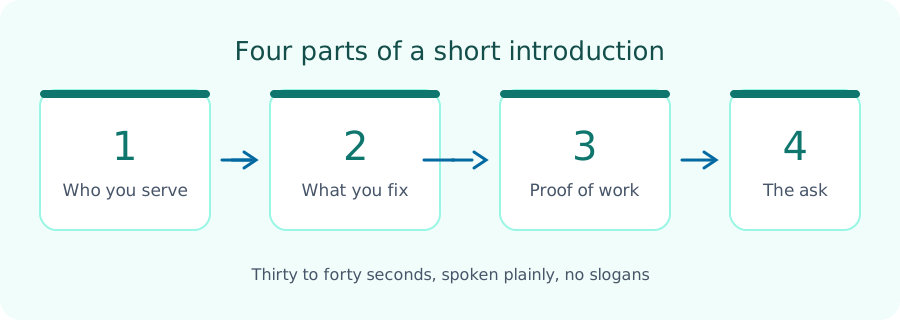
You will be asked what you do several times a week, and the answer decides whether the conversation continues. Thirty seconds is enough. Four parts do the work: who you serve, the problem you remove, one piece of evidence, and what would be useful from the listener.
Use trade language, not marketing language. “We do end-to-end solutions” tells nobody anything. “We rewire small factories in this estate and we work on Sundays so the line does not stop” tells a listener when to think of you. Evidence can be ordinary: years in the trade, a problem you solved last month. End with a specific request.
Prepare a version in each language your market actually uses, and practise without notes. If a listener has to translate your sentence into plain speech before repeating it, your introduction will not be passed on.
Running a First Meeting
A first meeting has one job: to find out whether there is anything worth doing together. Forty-five minutes is plenty. Agree the finishing time at the start and spend two-thirds of it listening.
Questions that earn their place:
- What does a good customer look like for you? This tells you whom to send, and whom not to.
- Which enquiries do you refuse, and why? The refusals are often work you can take.
- What goes wrong most often in your line? It shows where a partner is genuinely useful.
- Who else do you rely on locally? It maps the circle you are stepping into.
- How do you prefer to be contacted? Respecting this is half of a good relationship.
Close by writing down, in front of them, the one thing each side will do and by when, then read it back. If nothing concrete emerges, say so pleasantly and leave it there; an honest nothing beats a vague promise neither side intends to keep.
How Mutual Referrals Work
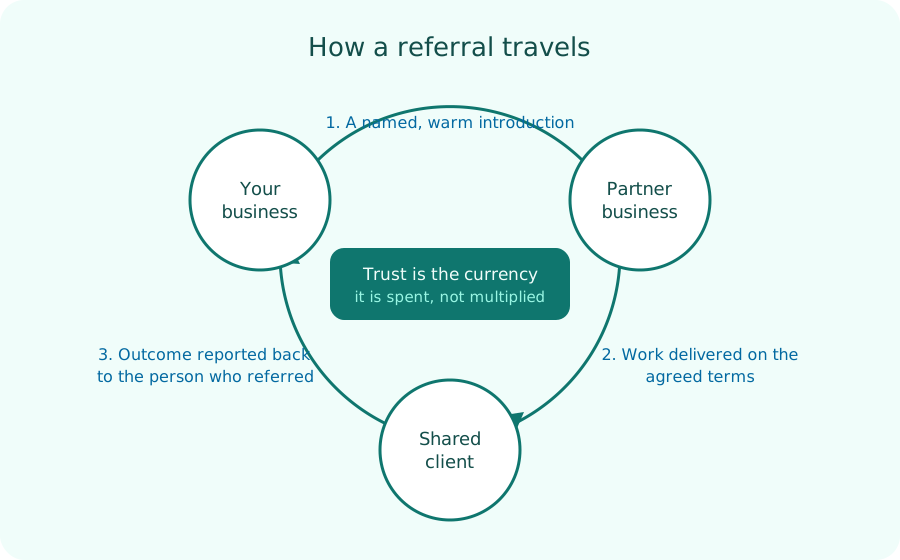
A referral is not a phone number passed along. It is a named introduction from someone whose judgement the customer already accepts, and it carries that person's reputation. Referrals are spent rather than multiplied: every introduction puts your own standing behind another firm's work.
The consequences are simple. Refer only work you would have taken yourself. Tell the receiving firm what you promised on their behalf, before the customer calls. Report back to whoever referred you, good outcome or bad, because silence after a referral is read as a bad outcome.
Putting a Partnership on Paper
When referrals become regular, write down the terms while the relationship is still cordial: what counts as a referral, who speaks to the customer, who fixes a complaint, and how either side ends the arrangement. Two pages is enough. The document exists so that two busy people remember the same agreement a year later.
Keeping a Contact Alive
Most business relationships fail quietly in the first month, not because anyone lost interest but because nobody wrote anything down. Keep a record in a notebook or a spreadsheet: name, firm, what they do, what was agreed. Review it once a week. That is the entire system.
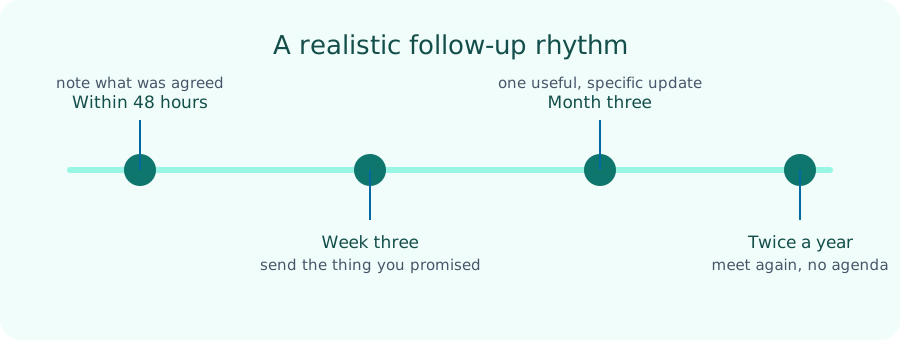
A workable rhythm looks like this. Within forty-eight hours, note what was agreed and confirm it in one short message. By the third week, send the thing you promised, even if it is small. Around the third month, get in touch with something specific and useful to them, not a greeting. Twice a year, meet with no agenda at all.
Contact is worth more when it costs the other person nothing. A rate change, a tender notice, a reliable vendor, a warning about a defaulter: any of these is remembered far longer than festival wishes sent to two hundred numbers at once.
Mistakes That Cost a Reputation
In a local market, reputation is the only asset that cannot be rebuilt quickly. A few errors damage it faster than anything else.
- Selling at the first meeting. It converts a possible long relationship into a declined offer.
- Over-promising capacity. Work you cannot staff harms the person who recommended you as well as the customer.
- Treating a referral as a lead. Handling it carelessly ends the source, quietly and for good.
- Discussing a partner's rates or customers. Word returns to them, always, and usually distorted.
- Going silent when something goes wrong. A delay explained early is forgiven; a delay discovered late is not.
- Keeping score too openly. Demanding a referral for each one given turns a relationship into a transaction, and transactions end.
The common thread is short-term thinking in a setting that rewards patience. The people in your lane will still be there in ten years, and so will their memory of a difficult job.
Working with Local Trade Associations
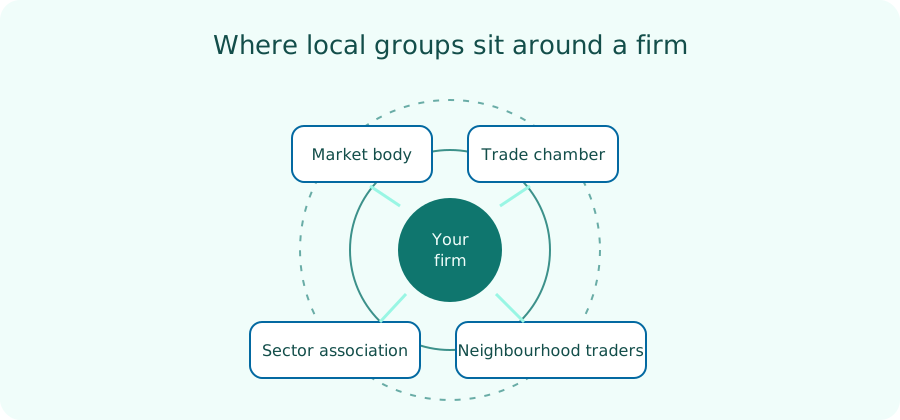
Most Indian towns have several organised bodies a small firm can join: a district chamber of commerce, a sector association for the trade itself, a market or estate traders' committee, often an exporters' or manufacturers' group. Each gathers a different circle, and membership alone achieves nothing.
Value comes from visible, unglamorous work: maintaining the member list, organising a training session, taking minutes, coordinating with the municipal office on a shared problem. People notice who turns up and who delivers, and that is the reputation you are building. Committee work also puts you in the room where local decisions are discussed before they are announced.
Choose one or two bodies and attend consistently rather than joining five and appearing at none. Read what they circulate: notices on compliance dates, tenders and scheme changes are often the earliest reliable information a small firm receives.